The Berehynia Necklace
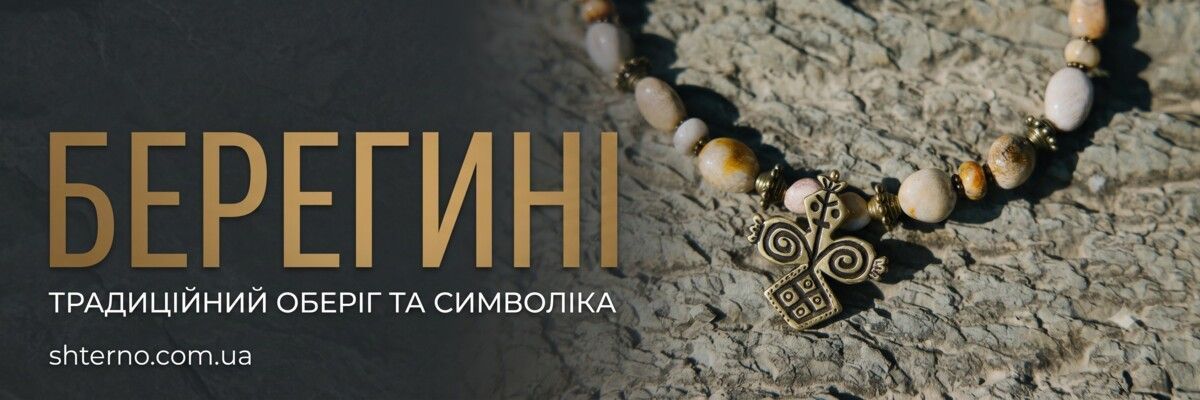
The image of a woman with raised or outstretched arms is one of the oldest and most widespread motifs in folk art. It was embroidered on rushnyky (ritual towels), shaped in ceramics, and painted on pysanky long before the word "amulet" even existed.
Beside the figure you often find a rhombus divided into four parts, each marked with a dot. Ethnographers read it as a symbol of a sown field: four plots, each holding a seed. It is an ancient sign of fertility, prosperity, and the continuation of the family.
Today this female figure is called the berehynia — a symbol of protection for the home, the family, and the bond with one's ancestors. To be honest, the image itself and the "sown-field" rhombus are genuinely ancient and well documented in ethnography, whereas the berehynia as a whole "goddess cult" is more of a later reconstruction. So we speak of her as the name of an ancient symbol, not as a proven religious cult.
Our berehynia necklaces
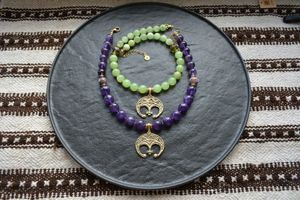
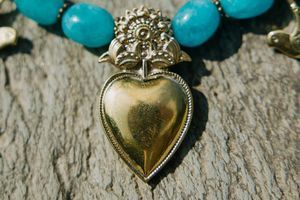
In these necklaces the berehynia is the central pendant, surrounded by natural stones: amethyst, garnet, tourmaline, labradorite, carnelian, jasper, rose quartz, and more. We also use traditional materials — amber, coral, mother-of-pearl, and pearls.
Every stone is unique in color and pattern, so no two necklaces are ever the same. The minimalist format fits easily into business, casual, festive, or boho looks alike.
What matters most
We believe jewelry should be chosen not "to match a dress" but to match yourself — who you truly are. A berehynia necklace is for those who resonate with the idea of the woman as a pillar of strength, and who want to wear an amulet every day rather than save it for special occasions. It also makes a warm gift — for a mother, a beloved, or a friend.
👉 Choose your berehynia necklace from the handmade SHTERNO collection. For questions about the stone, length, or timelines, message us on Instagram @shterno.etno.