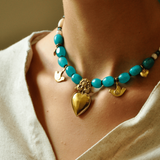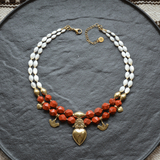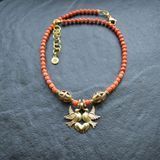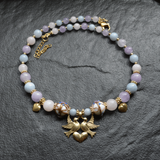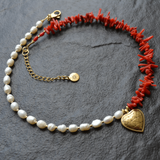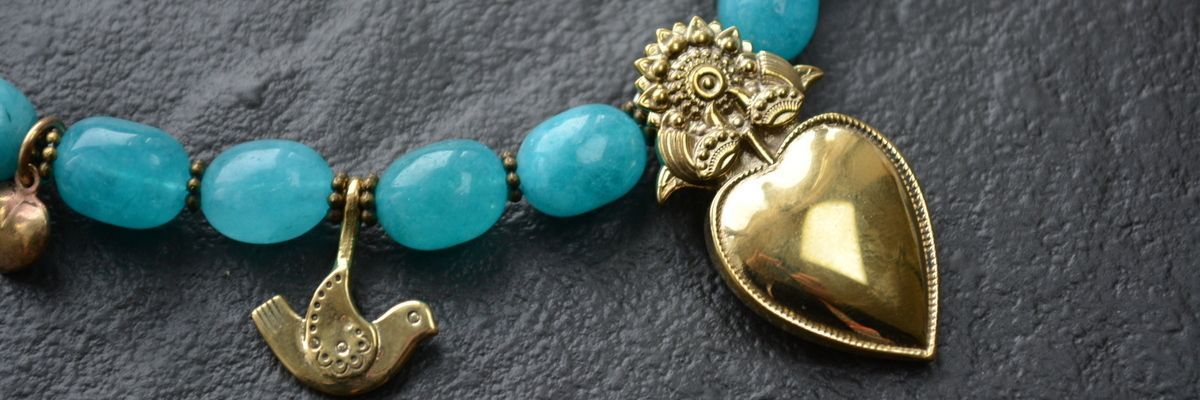
In the folk adornments of Slobozhanshchyna — the Kharkiv, Kursk, and Voronezh regions — the most widespread dukachs were those with a heart-shaped medallion. Researchers link this to the cult of the heart that came to Ukraine from Western Europe: images of the heart became common on religious and devotional objects, and later passed into women's jewelry.
The name "yahnusok" itself comes from the Latin Agnus Dei — "Lamb of God." This is what medallions bearing religious imagery, worn as amulets, were called. Over time the shape and decoration of folk dukachs grew more secular, but their sacred origin remained in the name.
A dukach was not merely an adornment but the central, most treasured pendant of a necklace — the one that signalled a family's status and was passed down as an heirloom. It wasn't worn "to match an outfit." It was itself a mark of who you are and whose you are.
Our yahnusok today
A brass heart with a flower and little birds, made by hand, is a modern stylization of that very tradition. In Ukrainian folk art, birds symbolize good news and marital fidelity, while the flower stands for life and abundance.
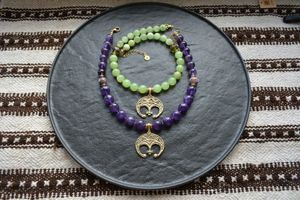
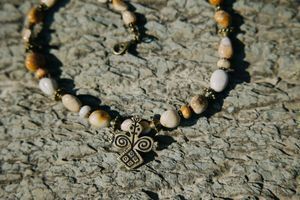
Each dukach is made to order, and the natural stone in every necklace differs slightly in color and pattern. So your piece will never be exactly the same as anyone else's.
What matters most
We believe jewelry should be chosen not "to match a dress" but to match yourself — who you truly are. The dukach yahnusok is for those who wear Ukrainian heritage not just on holidays but every day, and who value a piece with a story rather than one off an assembly line.
👉 Choose your dukach yahnusok from the handmade SHTERNO collection. For questions about length or timelines, message us on Instagram @shterno.etno.